

























































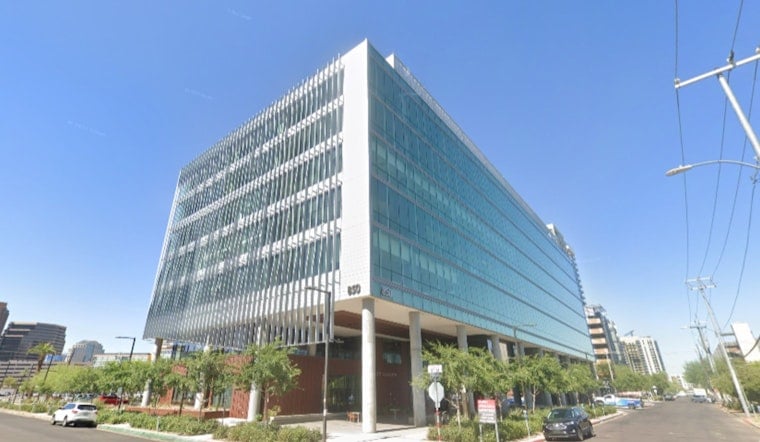
Federal health officials cut the ribbon on a new diabetes and metabolic research facility in downtown Phoenix last Friday, unveiling a 35,000-square-foot unit that houses the only four human metabolic chambers of their kind anywhere in the world. But the building's 11 overnight guest rooms, known as domiciles, are sitting mostly empty for now because the branch does not have enough night nurses to run round-the-clock studies.
The National Institutes of Health formally unveiled the new clinical research unit for the National Institute of Diabetes and Digestive and Kidney Diseases, or NIDDK, on the seventh floor of the bioscience building at 850 N. Fifth St., as reported by Axios. The City of Phoenix hosted an official grand opening ceremony on Aug. 14, with Mayor Kate Gallego joining NIH and tribal leaders for the celebration, according to the City of Phoenix. Kevin Robinson said investments like this facility strengthen the economy, attract world-class talent and advance discoveries, per Axios's reporting.
Staff actually moved into the new space back in January and have been conducting outpatient research for the last two months, the outlet's report notes. But the branch is not yet open for inpatient research, since it lost all of its night nurses, according to Leslie Baier. NIDDK plans to address the night-nurse shortage, though no timeline for fully staffing the domiciles has been announced.
From a Rundown Building to a Downtown Landmark
Baier described the branch's previous location, inside the Phoenix Indian Medical Center, as not in very good shape. The move to 850 PBC represents the culmination of a multi-year consolidation effort: developer Wexford Science & Technology announced in September 2023 that the NIH had signed a lease taking over the entire seventh floor of the building, allowing all of NIDDK's Phoenix branches, previously scattered across sites including the TGen building, to operate under one roof, per Wexford Science & Technology.
Clifton Bogardus said NIDDK initially had trouble convincing the city that the facility would not house sick people, and study participants, he noted, can leave the building on their own power. Once the domiciles are fully operational, the new facility will allow NIDDK to expand its research, including a long-term study following women and children from pregnancy through a child's 18th birthday, and new research into overeating, the outlet's report states.
Metabolic Chambers Built to Measure How Bodies Burn Energy
The centerpiece of the new unit is its set of four metabolic chambers, sealed testing rooms that allow researchers to study how bodies use air, food and water under different conditions, according to NIH. The City of Phoenix notes that this makes the facility the only clinical research unit in the world with four dedicated metabolic testing chambers, a distinction that positions the branch to run studies at a scale no comparable lab can match.
A Six-Decade Partnership With the Gila River Indian Community
NIDDK has worked with local Phoenix communities since 1965, when federal researchers initiated a landmark longitudinal study of type 2 diabetes and obesity in partnership with the Gila River Indian Community, a collaboration with deep roots documented by the National Institutes of Health. That history is reflected inside the new building, which displays original artwork from local Indigenous artists alongside archival photos from NIDDK and the Gila River Indian Community.
The stakes behind that decades-long partnership remain stark. State health data show that approximately 20% of Native American adults in Arizona have been diagnosed with diabetes, nearly double the statewide adult average, according to the Arizona Center for Investigative Reporting. Statewide, more than 615,000 Arizona adults are living with diabetes and nearly 2 million have prediabetes, costing the state $6.7 billion annually in direct and indirect expenses, per the Arizona Department of Health Services 2025 Diabetes Action Plan.
Part of a Booming Bioscience District
The new NIDDK unit sits inside a 30-acre district that has already attracted more than $3.25 billion in healthcare facility and lab development, per Transwestern's market research. Downtown Phoenix has become a biomedical hub over the last two decades, and the NIH facility may draw even more biomedical companies and facilities to the area going forward, Axios's report suggests.
That momentum has been visible just steps away. Last month, the Arizona International Soft Landing Experience expanded into the same 850 PBC building, opening an outpost in Connect Labs by Wexford to help international medtech firms scale up in downtown Phoenix, as Hoodline reported at the time. Industry data from CBRE found that Greater Phoenix saw a 33% growth rate in life science researchers over the five years leading into 2023, making it the third-fastest growing emerging life sciences market in the nation.
For now, NIDDK's newest tool for tackling one of Arizona's costliest health crises remains only partly switched on. The four metabolic chambers and outpatient labs are running, but the 11 domiciles built to host study participants overnight or for days at a time will stay largely idle until the branch solves its staffing gap.




